Select any community in small-town America, and take
a look at its prominent citizens.
Chances are that one or more of them are bankers. These men (and they generally are men) have
invested time, energy, and money in their communities. They have helped their communities to grow, and
prosper often over extended periods of time.
They have helped to provide automobile loans, home mortgages, business
start-up and expansion loans, civic improvements, support for schools and
athletic teams, and similar ventures.
They are usually the pillars of their communities, actively involved in
both secular and church affairs, and most often men of personal integrity, a
deep sense of ethics, and pride in what they have accomplished.
One cannot think of the old Bank of North Lewisburg
without also thinking of William Merle Creviston. He was associated with the bank for decades,
and could be found on any weekday seated in his comfortable working office,
located not far from the tellers’ cages and the front lobby. He was always fashionably, yet conservatively
dressed in a business suit, brilliant white shirt, tie, and highly polished
shoes. He always looked like he had just
stepped out of a barber’s shop, with his hair neatly trimmed and parted, his
features devoid of any facial hair. He
was a successful businessman, and he looked and acted the part.
He had gone off as a young soldier during World War
I. He had returned to make his mark in
the banking world.
In the mid-1950s, Mr. Creviston had a new home built
on the south side of North Street, adjacent to the George Bishop home. It was built of bricks, a modern home set amidst
older frame homes which dotted both sides of the street. When it was being built, a young boy wandered
from his own home at the corner of Sycamore and North Streets, to observe the
construction day after day. He always
stood away from all of the activity so as not to impede the work…or to cause
the construction crew to chase him away.
The hole for the basement was dug, the forms set in place, and the
concrete poured to create the walls. Lumber
beams to support the floors were nailed across the vast opening. The following day, much to the kid’s surprise
as he stood watching once again, the construction boss beckoned to him and had
him step up on the foundation. “Want to
help?” the boss asked, as he handed the kid a claw hammer, apron, and some
nails. The boy eagerly took the tool,
apron and nails and followed the boss as he walked on a section where a
subfloor had been installed. The boss
showed the kid what needed to be done to drive the nails into the subfloor
boards and then on into the lumber structure.
For the next few hours the boy was in near-rapture as he drove the nails
and helped to lay the subfloor. Work
done, he gave the hammer and apron back to the boss, and ran toward home to
tell the tale.
Construction proceeded rapidly, and soon the
Creviston family made its home in the neighborhood. Mr. Creviston took his every weekday morning
drive down North Street and Sycamore Street to “downtown,” and the Bank of
North Lewisburg which stood on East Maple Street. Late in the day, he made the return trip to
his home. That summer, he asked his
newspaper boy (nee carpenter) if he would be interested in occasionally mowing
the lawn.
That was my first experience in a long-lasting
association with Mr. Creviston. That
summer I mowed the lawn a few times, continued in my duties as his newspaper
carrier, and cashed an occasional check I had received (for lawn yard work) at
his bank. I became familiar with Dixie,
and Patty, and Bob who all worked in the bank.
And occasionally I saw Mr. Creviston as he went about some banking duty.
My family moved out of town for one year, to a place
located on Highway 559 on the route to Woodstock. I left the old neighborhood of Sycamore and
North Streets, but continued in my yard mowing and newspaper ventures. Summer Saturdays were big for me as I
scurried around the town mowing various lawns, and transacting my limited
shopping trips – primarily to Alma Hall’s store to purchase the latest issue of
MAD magazine or my favorite comic book…or those delicious chocolate-covered
peanuts.
Time passed.
I grew older; my business ventures proved more profitable; my wants and
needs became more pronounced. Our family
had moved into a two-story house on East Street, adjacent to the old high
school building.
I walked into Richard and Leatrice Russell’s
electronics store one day and saw a reel-to-reel tape recorder. It was big and bulky and attractive, and
looked like something I really needed for my school work. The price on the tag was $89, more cash than
I had on hand. Impetuous teen that I
was, I left the shop, walked across Maple Street, and went into the Bank of
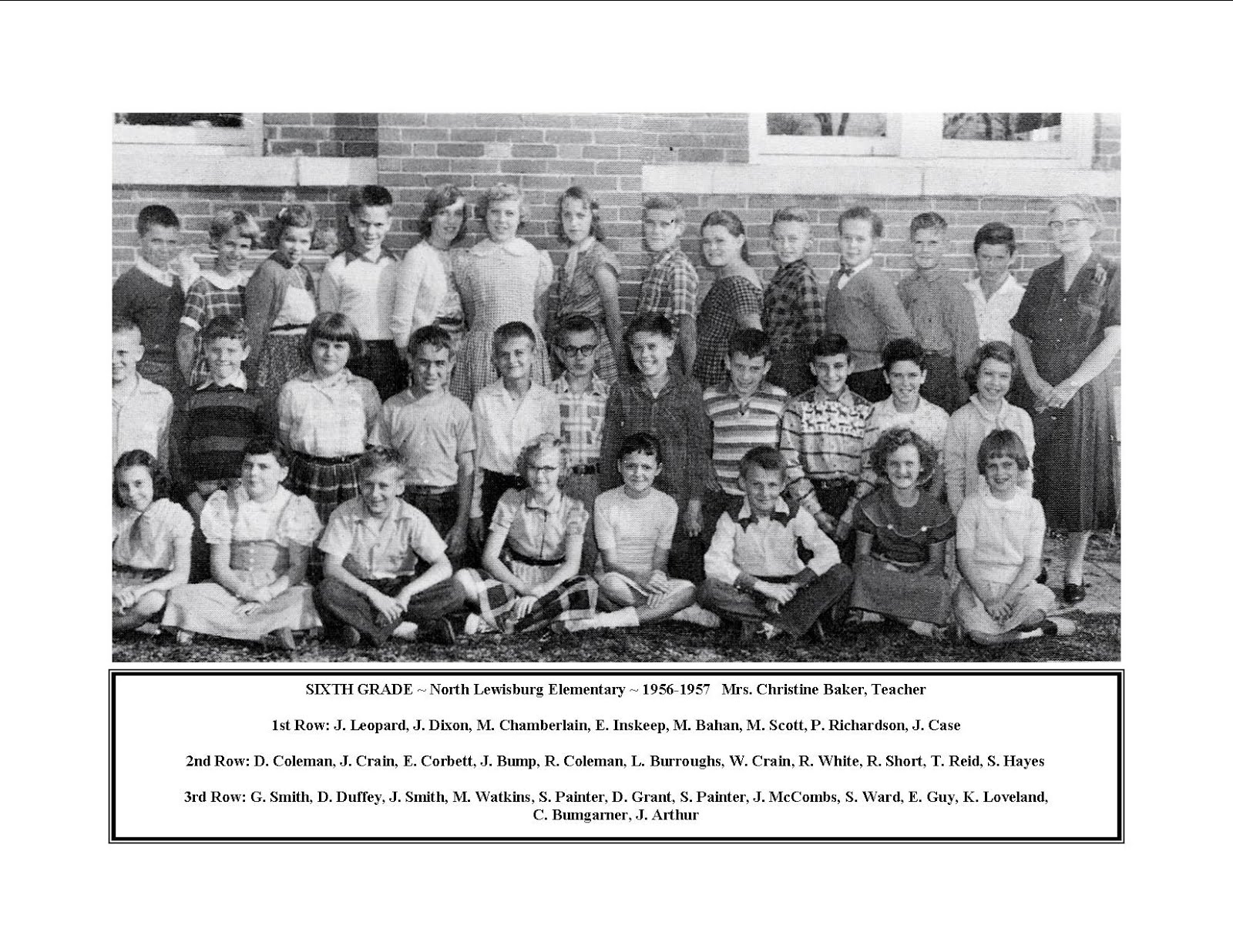
North Lewisburg. Bob Chamberlain, a
teller, asked if he could help me. I
boldly asked if I could speak to Mr. Creviston.
Bob disappeared for a few seconds and then returned to open the door
that separated the lobby from the working area of the bank. I gulped once or twice, and hesitantly
followed him to Mr. Creviston’s office. Bob knocked, Mr. Creviston looked up, and
asked me to enter and take a seat. “What
can I do for you, young man?”
He appeared to be attentive as I laid out my story
about the tape recorder, and my request for a short-term loan to make the
purchase. He asked me how I intended to
repay the loan, and I explained that I would make a payment each Saturday from
my weekly lawn mowing receipts or newspaper money. He gave the matter some thought, and then
told me that he would grant a $90 short-term loan, to be paid for at the rate
of $5.00 each week until the debt was cleared.
He prepared a contract for me, and had me read it before affixing my
signature on the line provided. He
escorted me from the office back to the
lobby, and had one of the tellers…I think it was Bob Chamberlain…issue the
currency. In a daze, and yet somewhat
proud of myself, I walked back across the street and bought the tape
recorder. I carried it home, and used it
repeatedly in the next few years to record tapes (some of which I still have
after all of these years).
I made my weekly payments to the Bank of North
Lewisburg, and actually doubled and tripled my payments to help pay off the
loan in a relatively short time. I had
my sights set on a new 19-inch black-and-white television for my bedroom!
I worked out another $125 loan arrangement with Mr.
Creviston. Soon the television was part
of the décor in my bedroom, and soon thereafter the loan was repaid.
The next object of my affection was a bit higher
priced. I fretted about it for a few
days before getting up enough courage to approach Mr. Creviston. I was 15 years of age by this time, and
thought I needed to advance beyond my Schwinn bicycle as a means of
transportation. I was in high school,
and needed a way to get around town and the area more quickly, and with less physical
effort on my part.
Ronnie Loveland had decided to sell his Lambretta
motor scooter. It was an Italian import
scooter, which had been repainted in beautiful tones of metallic brown and crème. It had seats for two, and a spare tire which
was mounted upright behind the passenger seat.
I just had to have it!
It was after dark when I rode my bicycle from my
home to the north side of town. I rang
the bell at Mr. Creviston’s home, and was met by Mrs. Creviston. I asked if I could speak with her husband,
and she graciously welcomed me into their home.
She ushered me into the dining room, where Mr. Creviston was
standing. He asked me to take a seat at
the table before he sat. In my teenage
way, I told him that I wanted a motor scooter, that Ronnie Loveland had one for
sale, and that I needed a bank loan in order to buy it. I told him that I’d be able to pay the loan,
as I had before, from my lawn mowing jobs and paper route earnings. He talked with me about the dangers of
scooters, and how it might be more practical to purchase a car. I pointed out that I was only 15, and would
not be able to have a license to drive a car for another full year. I emphasized once again how the scooter would
help me get around town faster on my paper route and thus provide me with time
for other work. He did not give me a “yes”
or a “no,” but he did invite me to stop by the bank the following day during
business hours (I was old enough to catch the subtlety in that part of his
remarks).
Accordingly, the next day I rode my bicycle to the
bank. I entered the lobby, stated my
business, and was escorted to Mr. Creviston’s office. Banker to customer, he explained the
documents which he had already prepared.
He went over the details of the loan and the payment requirements. He then had me sign the documents, leaned
across the desk and extended his hand. I
stood up, shook his hand, and returned to the lobby. A few minutes later, I was on my Schwinn and
on the way home. I got there, quickly
negotiated the lock gate, and walked my bicycle to the back of the house. I ran back through the gate, across the old
school yard and adjacent field behind the Methodist Church, and arrived at
Ronnie Loveland’s house. I met with
Ronnie, handed over the cash, took possession of the title, and went with him
outside to grab the Lambretta. He gave
me a few last-minute instructions, and soon thereafter I was hurling down the
streets toward home.
That Sunday morning I went to services at the
Methodist Church. As I walked into the
chapel, I saw Mr. and Mrs. Creviston sitting in their customary pew. I looked at him, and smiled with a slight nod
of my head. I was surprised when he
winked and smiled back at me.
I saw him many, many times after that and over the
course of the next several years. I
remained his paperboy for a long, long time.
He and his wife were regular customers at Arthur’s IGA where I later worked
for three years. He could always be
found in his pew at the Methodist Church on Sunday mornings.
Years passed, and I moved away from North Lewisburg,
and then eventually out of state. One
year I had the opportunity to return home for the Memorial Day
observations. Ralph Westfall, who was
commander of the American Legion at that time, offered me the chance to play “Taps”
during the ceremonies to honor one of the town’s deceased veterans. After a similar observance in nearby
Woodstock where I also played “Taps,” I arrived at Maple Grove Cemetery in
North Lewisburg. Mr. Westfall told me
that the observance there would be in honor of Merle Creviston.
William Merle Creviston (1897-1981) is buried in
Square 164, Lot 4, Gravesite 3. It was
my distinct honor to stand a short distance away from that site, to raise the
trumpet to my lips, and to sound “Taps” in memory of a remarkable,
community-minded, and gracious man.