Thursday, February 18, 2010

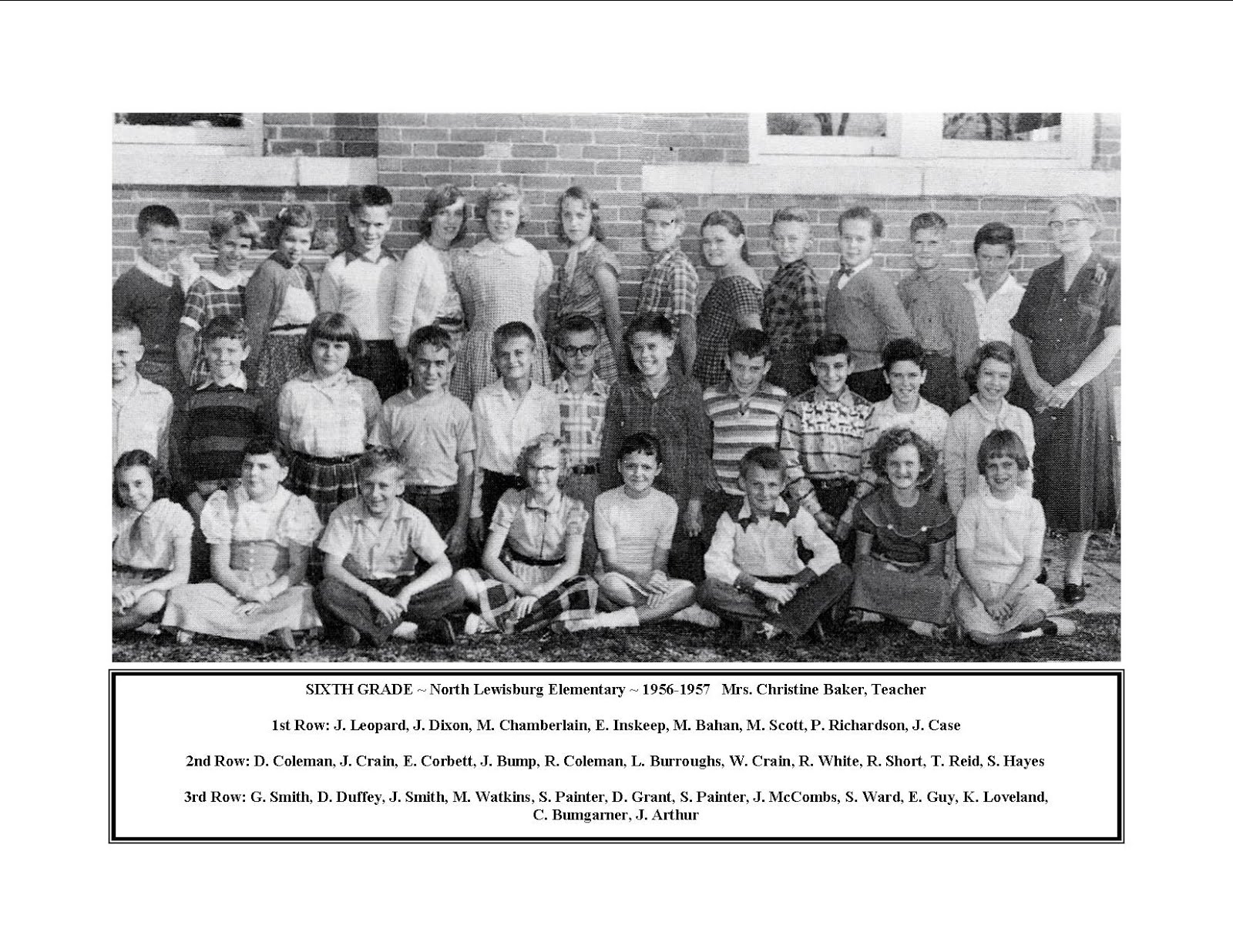
Tommy Reid's Basement

During the years before I started attending school, I lived in a clapboard frame house at the corner of Sycamore and North Streets in North Lewisburg, adjacent to the corporation boundary line.  North Street was an incline which culminated at the city limits.  Looking out the large plate-glass window of our living room, I wondered who lived in the large farmhouse at the top of the street, with the big, imposing white barn.  After my first few days in the first grade at the local elementary school, I learned that I had a classmate who lived in that very house.  His name was Thomas Vincent Reid, or "Tommy" for short.

Tommy's parents were Paul and Virginia Reid, and farmed an extensive area of land which abutted the corporation boundary.  Their home was a two-story, white, wood-framed house.  There were several outbuildings, to include that very large white barn, a milking parlor and stable area, and corncribs.  As I came to know Tommy and to spend more and more time at his home - as opposed to my own - a whole new world of adventure beckoned.  There were wide expanses in the big barn to explore, flocks of pigeons to scatter with our b-b guns, stored field corn to help shuck and grind, and tunnels and hide-aways to construct in the hayloft where the bales of hay were stored. 

I had the opportunity to watch the cows - Holsteins, mostly -  being milked, not by hand but with the elaborate milking operation.  The warm, white liquid created by each cow was sucked into large, stainless steel containers.  When these containers were full, they were carried into the milk parlor, and emptied into a large metal vat.  The milk was stored there until the arrival of an especially-equipped truck sometime later in the week.  The precious milk was then siphoned into the truck's bulk tank, and eventually found its way to an area dairy where it was treated and bottled for sale.

The cows fed on the luscious meadow grasses which surrounded the barn and lots during the warm months of the year.  During the winter, the hay which had been grown, cut, and baled during the summer months was used as feed.  This was supplemented with ground corn, wheat, or oats which were grown and harvested in the productive fields. 

There was usually at least one - and sometimes two - large, dangerous looking Black Angus bulls which seemed to dominate the farm.  The boys who were eventually attracted to play at the farm were warned about, and very leary of, those huge, scary animals.  More than once, boys who had not been quite careful enough were chased around the premises by an intimidating, and often angry, black bull.

As time passed, and neighborhood boys like myself became more common visitors to the farm, our boundaries and limitations were extended.  Boys roamed the fields, occasionally helped with the chores, and were treated to fishing trips to Devil's Well, a private pond owned by the Reid family.  There is a great story about one very large wide-mouth bass, a rowboat and a bush...but that's a story for another time.

Paul and Virginia were hospitable, and treated the boys with trust.  They asked only one major concession:  absolutely no one was to go into the basement of the house where the family had installed a large, ornate, and expensive pool table.  That rule was faithfully observed...at least for a short period of time.  As the boys became more and more daring with age, and opportunities presented themselves, the pool table was no longer off-limits.  When Paul and Virginia would get into the family car and drive away to go shopping, or to visit friends, the boys who were there slipped into the basement, using an old exterior basement doorway.  The balls were racked up, the cue sticks were chalked up, and some very aggressive games of "Eight ball" transpired.  The games would continue until the sounds of the returning car caught the boys' attention.  Then followed the mad scurry to put the balls, rack, and cue sticks back into their proper locations, and to vacate the premises...all without being seen by either Paul or Virginia.  Most of the time, the boys were successful.  At other times, they were literally "caught in the act."  Then came the stern lecture from Tommy's parents, to which all of the boys promised to adhere...at least until the next time.  The boys never tired of the game of evading capture!

Tommy and I remained friends as we completed the years leading up to our graduation from high school.  We went our separate ways after that, rarely seeing each other over the next 40 years or so.  In 1990, I stopped in our hometown while on my way to an Army duty assignment in Panama.  I drove on familiar streets to the Reid farm, knocked on the door, and visited for a few minutes with Paul and Virginia.  I was very glad I took the time to stop by and thank them for the memories of the occasions I had spent on their farm.  Sadly, Paul Reid died in 1992.  Virginia Reid died in 2009. 

Only this past summer did I have the opportunity to return to our hometown and to spend a few hours visiting with Tommy and his wife,  Darlene.  It was good to do so, and so very long overdue. 


Wednesday, February 17, 2010

"Last Night I Wandered In A Dream..."

One of my friends - someone I have known for many, many years - wrote a short article for inclusion in a memory book which was prepared in Champaign County, Ohio, a few years ago.  I stumbled across her handwritten essay just a couple of nights ago, and thought I'd include some of her recollections in this blog.  I've taken the liberty of editing these recollections and condensing the adventures which can be found in her original ten-page document.

Elaine Spain Chapman grew up in and around North Lewisburg.  Her ancestors were some of the many who traveled from Virginia to settle in the fertile area around what was to eventually become North Lewisburg.  In the prelude to her article, she wrote:  "Words to an old love song go something like this:  'Last night I wandered in a dream along a stream and you were there among the moonmist.'

She wrote that the stream of her song and dream is not really a stream, but a creek, "or as we called it a 'crick.' "  It was the stream of her forefathers, Spain Creek, which meandered and "gently flowed" from its point of origin near the present community of Mingo toward North Lewisburg.

"...the Spains settled all along the pleasant water supply.  It's recorded that these early settlers built a few mills to care for their needs.  Playing as a child along the "crick," (I) saw evidence of these long-gone mills - rocks and huge chunks of concrete."

As a child, and later as an adult, she hiked along the streambed.  The stream was more winding and meandering than now.  The original channel had yet to be dredged and straightened, and the banks made devoid of the native trees, shrubs, bushes and plants.  Pollutants had not yet killed off the minnows, fish, and other creatures which depended upon the stream.    There was no TV then, no video games to divert the adventurous behavior of children.  The good clothes reserved for school were shucked at the end of the day; older garments were put on - maybe bib overalls for the boys, simple cotton dresses for the girls.  Then, kids found their separate ways to the creek.

The boys rolled up their britches to wade in the creek.  The girls just held their dresses up above their knees.  Most kids went barefoot during the summer.  Shoes were reserved for the school year.  And those shoes went to a local shoe repair shop; there was not enough money in the family funds to buy more than one pair per child per year. 

Boys carried a long string of fishing line in their pockets, a fishhook or two, and the every-trusty pocket knife.  They used the knife to cut a stout, yet flexible willow branch to use as a pole.  The line was tied on and a hook was added to the end.  Maybe a worm or cricket or piece of popcorn was snared by the hook to use for bait.  For a bobber, a piece of dry willow branch was tied to the line.   The boys then cast their lines into a nearby deep pool, and hoped for the best.  There were fish, and crawdads (crayfish), frogs, turtles and other forms of life in the water...fair game all.  And of course, there were snakes!

There were water snakes, non-poisonous, but fearful looking all the same.  There were no water moccasins or other poisonous snakes, but there were plenty of the dreaded blue racers.  These long, slender snakes were aggressive in their behavior.  "They were fast and they were scary!  They acted like cobras," hissing and threatening "like they would strike."  Run, and they chased you!  Truthfully!

Some turtles, like the snapping turtles, were thought to be just as dangerous.  Everyone knew that if someone was bitten by one of these monster turtles, the turtle would not let go until sundown! 

There were stagnant pools of water along the streambed which became the breeding grounds for millions of mosquitos.  They could carry many different kinds of disease.  The biggest fear of both parents and children, however, was the ever-present threat of polio.  In the days before the discoveries of Dr. Jonas Salk and a vaccine to prevent polio, the hot, muggy, "dog days" of summer were especially fearful.  Kids were warned to stay out of the water.  The regular "March of Dimes" featurette at the local movie theater reemphasized the tragedies of polio.

There was a railroad trestle which crossed the creek.  It was scary to walk the rails, trying to keep balanced while looking down between the railroad ties at the water far, far below.  No one wanted to get trapped on the bridge when a train was coming! 

The railroad ran through the small towns, connecting one grain storage elevator with another.  During the Depression, men who worked on the trains threw chunks of coal off to needy residents who stood waiting anxiously along the roadbed.  Sometimes a kind engineer tossed off the Sunday newspaper "funnies," so kids could enjoy the antics of "Bringing Up Father," or "Mutt and Jeff."

Kids scoured the countryside for young dandelion greens, asparagus, wild strawberries, and mushrooms.  Boys and men hunted the scrub brush and fields along the railroad and creekbed.  Pheasants, rabbits, and squirrels abounded in the area, and were a welcome treat on the dinner table. 

Elaine's article recalled with fondness these and many other sights and adventures from her youth, growing up "Along Spain Creek."  I am grateful that she shared these recollections with me.


Tuesday, February 16, 2010

In Memoriam

My good friend and life-long pal, Robert Lowell "Bob" White, died of cancer on February 15, 2008, just a couple of months beyond his 62nd birthday.  He was a gentleman, a gentle man, and an active member of the community.  A dedicated, loyal, and eager worker, he is sorely missed. 

My Best Friend Died Today
In Memory of Robert Lowell White
1945-2008

It should have been a day like any other,
filled with the sights, sounds, and smells to which I have become accustomed
these past sixty-three years.
Yet, it was a day unlike any other which has come before.
My best friend died today.
We had been pals, bosom-buddies for more than a half-century.
We had shared the same middle name, a fact which we talked about so very many times.
He had shared his contagious smile and raucous laughter with me on
oh, so many occasions over the years.
He had introduced me to his boyhood farm, and the daily ritual
of caring for the land and the livestock.
He had shared his compassion when loved ones were lost to me; and I had
reciprocated when he had experienced his own losses.
He was the familiar voice at the other end of the telephone connection.
He was the written message on cards and letters in his simple script.
He was the funny guy who could cheer me up with a silly joke or story.
He was the friend who remembered my birthday with a subscription to a draft horse magazine.
He was a friend who had stood by me when so many others turned away
in my hour of weakness.
He had loved me for who I was and did not find fault with me.
When the call came today, I was unprepared.
Numbed, I listened to the words but could not comprehend them.
Only later, when I had a few moments to reflect, did the tears flow freely.
During the quiet times to come, when I am left alone with my thoughts and memories,
I will picture his face, hear his voice, and laugh with him.
My best friend died today.
He is gone, and I will miss him.

(c) 2008  Ralph Lowell Coleman, Jr.

Fraternity, Charity, Benevolence

About the time of, or shortly after, the Civil War, a fraternal movement swept the nation.  The Masons had long been an established fraternal organization in the United States, with lodges (or local organizations) spread throughout the states.  There was a renewed interest in the bonds of fraternal organizations, probably due in part to the comradeship which had developed during the dark days of the late war.  As a result, new organizations, based upon fraternal values, appeared on the landscape. 

Men sought membership in these organizations to provide themselves with forums for like-mindnesses in the cause of politics, religion, social status, or other reasons.  Small, rural communities like North Lewisburg were just as prolific with the rise of these fraternal organizations as the larger cities.  In the decades following the Civil War, North Lewisburg probably never exceeded a population of 1000 residents.  Yet, in the community could be found members of the Masonic order, the Eastern Star, the Knights of Pythias, the Pythian Sisters, the Independent Order of Odd Fellows, the Rebekahs, the Woodmen of the World, the Fraternal Order of Eagles, the Benevolent and Protective Order of Elks, and similar organizations.  While the town was not the host community for lodges, or camps, or meeting houses of all of these organizations - some townsfolk had to travel to the nearby communities of Marysville, Bellefontaine or Urbana to actually take part in the various organizations' rituals - there were a few prominent memberships in the community. 

The Masonic order was very active in the community and maintained meetings on a regular basis.  The male-elite arm of the order was composed of prominent members of the community.  The Eastern Star auxiliary was primarily a female organization, but opened its doors to participation by members of the Masonic order.  By the middle of the 20th century, the Masons were the predominent fraternal organization in the town and surrounding communities.  The organization purchased one of the old storefronts on Sycamore Street, and extensively remodeled the building to meet the needs of the burgeoning and quite active membership.  On lodge nights, or at other Masonic events, the streets of the community were lined with the parked cars of the faithful.  The building was aglow with lights and activities, camaraderie, meeting social and civil needs.  Even young people like my friends and I were aware of the Masonic community in our midst; it was often easy to recognize Masons by the rings or other fraternal jewelry which they wore, or the way in which they conducted themselves in social environments.  Some of the men in the community were actively involved in more than one fraternal organization.

Another prominent fraternal organization in the community was the Knights of Pythias, or K of P.  This group had met in the second story area of one of the buildings at the end of the business block which fronted East Maple Street.  They, too, held fraternal, social and civic activities in their meeting area. -  I recall attending many dinners, ice cream socials, or similar activites in that area of the building, with evidence of the fraternity visible through the charter which was displayed in a place of prominence in the hall.  I even recall once stumbling across a document of some sort in the meeting area which indicated my father had been a member of the organization prior to his induction into the service during World War II.

The primarily-female counterpart of the K of P was the Pythian Sisters.  These women seemed to be more pro-active than the male membership.   In addition to their regular meetings, they were always promoting dinners and other social outings.  They used many of these activities to raise funds for the organization.  And, they were wise when it came time to dispense those funds.  Thus it was that in the 1960s they, and the Knights,  decided to purchase an old church building and to convert it into a meeting hall.  Accordingly, the deed was done and the old building was remodeled to meet their needs. - Once again, I recall attending many activities and functions in that old hall.

As a matter of fact, my old buddy Mike Chamberlain and I had been encouraged by Don Woodruff (we worked with him in Arthurs' IGA store) to join the Knights of Pythias.  At the appropriate age - which I believe was 18 years of age - Mike and I both submitted our applications for membership.  As members, we spent several hours helping to repaint the interior of the main hall of the building.  In the course of time, we both progressed through three levels of membership in the organization - Page, Squire, and Knight.  At the time we were two of the youngest members of the lodge.  I looked forward to each meeting night, and the opportunity to gather with some of the "old men" of the community, true characters in every way. 

They were a mixed lot of men who had worked, married, prospered, and socialized in the town.  Even now, some fifty years later, I can picture their faces and "hear" their voices.  Paul Chamberlain was the quiet one, unassuming and dignified in all his demeanor.  Rarely did he speak during meetings; a former township clerk, he had long-ago earned the respect of his comrades.  Chester "Chet" Louden was an area farmer, who had also played a prominent part in the town's celebrations, providing music as a member of the town's band.  At every lodge meeting, Chet's voice rang out loudly and clearly with his cheerful "Are we having fun yet?"  His hallmark greeting was usually associated with the traditional card game of "Spades" which was an all-important part of the prelude to or conclusion of each meeting.  Floyd Simpson, Sr., was one of my personal heroes - a man whom I admired and respected. His voice and accent was like no other I had known before - or since.  It was deep, melodious, and carried throughout the hall.  In one of his periodic role-playing activities as the philosopher Pythagoras, his characterization, demeanor and voice created a dramatic aura in the room.  There was Don Woodruff, who had a contagious laugh and smile which set him apart from others.  He was always active, and a good role model for young men like myself.  Whether at the lodge meetings, or at work at his "second" job in the grocery store, or later when I came to work with him at the Champaign County Engineer's department, Don knew how to enjoy life.  His bubbling personality has never diminished over the years.  (Now in his eighties, he continues to be an active member of the community and a valued friend of long-standing).

My mother was a prominent member of the Pythian Sisters.  My step-father (William Robert "Putt" Forsythe) and I were active in the Knights of Pythias.  Mom encouraged both of us to also join the sisters' organization.  I look back with fond memories upon the time when my Mom - and step-father - became my "sisters," and the social activities we enjoyed as a family.

Something happened over the years.  As the old members of the fraternal organizations died out, there were few young people who seemed interested in membership.  Slowly, but surely, the life and glow of the lodges, camps, and temples disappeared.  The K of P lodge and the Pythian Sisters ceased to exist in North Lewisburg before the end of the 20th century.  The old lodge hall was torn down, the materials which had graced its walls and halls scattered.  The members of the Masonic lodge joined with one in nearby Mechanicsburg; their old building now a church. 

A revival of the principles upon which these fraternal and social organizations  were founded would be a good thing for America.  Important parts of a social and civic history we now seem to have replaced
with narcissism, it would be good to hear the cheerful cry of "Are we having fun, yet?" once again.

Friday, February 12, 2010

The IGA Store: My Life In A Grocery Cart

I don't know when they actually came to town; it just seemed like they had been there a long, long time.  Tom and Evelyn Arthur, with their only son Tommy, owned and operated the Independent Grocers Alliance...the IGA...store on Sycamore Street in North Lewisburg.  In the 1950s, 1960s, and into the 1970s, their store was one of a few  which graced the eastern side of Sycamore, in the "downtown" section of the community. 

Carl and Mary Keene, assisted by Mary's father Harry Brown, were the owners-operators of the pharmacy, or drug store, which sat at the intersection of Maple and Sycamore Streets.  The western wall of their building was the location of the town's "Roll of Honor," which memorialized the veterans of World War II and Korea.  Next, on the same side of the street, was the IGA store.  This was followed by a failing clothing store which had been in operation a number of years, then the Red and White foodstore, operated by Burleigh Woodruff, Vada's restaurant, and Billy Curl's barbershop.  A narrow alley separated these business establishments from the "residential" area yet further north on Sycamore Street.

In time, the drug store switched owners, and eventually ceased to provide the pharmacy, sundries, soda fountain and ice cream parlor for which it was well-known.  "Jeweler Jack" DeLong bought the building, and moved in his jewelry store operation from a short distance across the street.  It later changed hands again, and is, today, a real estate office.

The old clothing store closed as a business, and that portion of the block was purchased by Tom and Evelyn Arthur, who remodeled it and doubled the size of their grocery operation. More about them later.

Burleigh Woodruff also closed the Red and White grocery.  The building was acquired by the local Masonic and Eastern Star organizations, extensively remodeled, and made into a lodge meeting hall.  In addition to the many meeting which were to be held there over the years, the membership of the organizations periodically hosted dinners as fund-raisers, or provided meals following funeral services of its members. - As the years passed, and the century changed, with less interest in fraternal organizations, the building was sold and is today a church meeting house.

The restaurant also changed hands over the years until it was acquired by Claudine Vallery in the 1950s and renamed the Hiway 559 Coffee Shop.  It eventually became the gathering place for the town's teenagers, with its juke box and pin ball machines in operation, hamburgers and fries, and fountain-service sodas the daily fare.  - Claudine actually kept the business going for 35 years before it was sold to yet another proprietor.  (I personally wolfed down my fair share of cheeseburgers, fries, and Cokes during those many years of operation).

Billy Curl barbered in the community for over 50 years.  His wife Lydia styled ladies' hair.  The front of the store was a haberdashery of the latest styles of clothing and hats for men and women.  After Lydia and Billy's deaths, the old tonsorial parlor and beauty shop saw many different, and short-lived businesses.  It sits vacant today.

The constant presence on the street was the IGA store.  Tom and Evelyn Arthur were people-oriented tradespeople, who knew a good thing when they saw it.  They had weekly sales of the foodstuffs which were stocked on their shelves, a large, prosperous meat department, and an equally prosperous vegetable market.  They printed and distributed their own flyer, which listed the many great bargains to be had in the store.  The large, plate-glass windows at the front of the store were literally plastered with posters touting the weekly sales.  On Fridays and Saturdays, buyers actually flocked to the store to make their food purchases, to visit with friends and neighbors, and to say their weekly hellos to Tom and Evelyn.

One Halloween night in 1961, after the 9 p.m. nightly closing of the store, my friend - Mike Chamberlain - and I got it into our heads that those large, plate-glass windows at the front of Tom's store were perfect candidates for a "soaping."  Back before such antics were determined to be unlawful, and before the culprits were determined to be juvenile delinquents, such actions were commonplace in our small community.  Wild were the tales of other Halloween pranks - like the time a group of young people put the wagon on top of the Town Hall.  Ours was a considerably less daring activity, and did not involve heights.  Mike and I merely took the bars of soap which we had taken from our homes specifically for this purpose, and "soaped" the store's windows.  The soap bars were used like writing instruments to make squiggles, lines,  circles, and various other designs on the windows.  There were narrow strokes, and wide strokes, and whole areas of the windows which were obliterated with the waxy stuff.  We might even have written a few words - my memories are a little hazy some 50 years later.  But, proud of our work, and the fact that we had not been caught in the process, Mike and I laughingly made our way to our homes.

That following Monday, after we had spent the day in school and other activities, Mike and I joined up once again for another late afternoon and early evening of our regular activities.  I do not recall where we had been, but we rounded the corner at the intersection of Maple and Sycamore Streets, walked past the Roll of Honor on the drug store wall, and were just passing the IGA storefront, when Tom Arthur - dressed in his traditional dress trousers, long-sleeve white shirt open at the collar, white full-length apron, and the ever-present unlit cigarette between the yellow-stained fingers of one hand, and unstruck match in the other - greeted us with a "Hey, boys!  I want to see you!  Come in."  Mike and I exchanged sudden glances, and entered the store with trepidation.  Silent words passed between us:  "He knows we did it!"  We both nervously awaited the brow-beating which we knew was soon coming.

"Boys, how would you like a job?" were the words from Tom's mouth.  Mike and I looked at one another, awaiting the punch line.  "I'm serious" Tom said.  "How would you like to go to work for me?"

Feeling very lucky that he was not going to kill us for the mess we made of his windows - the squiggles, and circles, and lines still were evident on them - we both took all of a few seconds to respond with a tentative "Yes."

We reported for work the next day, the newest members of the Arthur's IGA work force.  Tom and Evelyn introduced us to our daily duties and responsibilities, told us what our work schedule would be, how much we would be paid (85 cents per hour!) and issued our crisp, white stockboy aprons.  We shared our hellos with the others who worked in the store - Tommy, who was the butcher and supervised the meat department; Christine Quinton, who worked with Tommy in that department; Bob Impson, one of my many cousins, who was another stockboy; and Don Woodruff, an indispensible "jack-of-all-trades" who would be our immediate supervisor, and eventual friend.

The preliminaries out of the way, Tom then sent us off to perform our assigned tasks  - Mike to assist with the restocking of products on the shelves, as well as bagging and carryout of customers' purchases.  Me, to find the bucket and squeegee and other materials at the back of the store - and to use them to clean off those awful-looking windows which "someone" had soaped over the weekend. 

Did Tom know who the culprits were who soaped his windows?  To this day, some fifty years later, I am uncertain.  All I do know is that for the next two years I was responsible for taking down the paper sales posters from those windows, and washing them inside and outside as part of my regular Tuesday duties.

More tales from "My Life In A Grocery Cart" to follow...


Monday, February 8, 2010

The Old Five and Dime

When I was a boy in North Lewisburg, I was quite the entrepreneur by age ten. I had acquired a list of loyal neighbors and family who entrusted their lawn care to me. Additionally, I was shortly thereafter a route carrier...a “paperboy”...for the Columbus Dispatch newspaper. And, to top it off, I had joined the 4-H organization, and raised champion hogs in county fair competition.

For my age, I had a lot of money, and then – as now – it literally burned a hole in my pocket. I eventually bought a Schwinn bicycle, with all of the trimmings. I bought a reel-to-reel tape recorder. I bought my own black-and-white television set, and my own stereo system. And, I still had money left over.

What better place to spend some of that hard-earned cash than the “Five and Dime” store on Maple Street, operated by Mrs. Alma Hall. She was ably assisted by a bevy of sales clerks, to include Mrs. Ruth Painter and Mrs. Helen Barnes, and others whose names I have forgotten over the years.

The store was a treasure house of goodies for a young guy with money to burn. Right at the front of the store, in a very big and tall glass and metal display case, was the “bulk” candy. The individual bins were filled with a luscious collection of mouth-watering treats. Alma, or one of the other ladies, would use the big metal scoop to dig into the piles of candy, and then transfer the sweet stuff to a scale. Candy was sold in ¼ pound, ½ pound, ¾ pound and 1 pound helpings...sometimes more if the buyer had a particularly needy sweet tooth.

My eyes always fell on the chocolate-covered peanuts. I placed my order for the appropriate weight, and watched with anticipation as Alma transferred the candy to a white paper bag, the open top of which she next folded over to protect the contents. Money and bag exchanged hands almost simultaneously, and I quickly opened the latter to extract with nimble fingers a few of the sweet-smelling chocolate confections. I enjoyed the candies as I moved about the store, seeking out additional treasures.

On the right side of the store, facing the back wall, could be found the “sundries and notions.” I never understood what that term meant, but knew that here I would find the crocheting needles, thread, yarn, and thimbles which my Grandma Katie Impson so often sent me to buy for her. There were pins of all sorts, bolts of beautiful cloth, and other similar items to primarily catch the attention of the female customers. There was a huge wooden rack, which held hundreds and hundreds of patterns for dresses, skirts, shirts, trousers, aprons, and other creations much-sought by the girls and ladies who knew how to sew. (Hard to believe, but back in those days many people actually made their own clothes! Imagine!)

The counters stretched to the far, back wall, on the right side of the store and contained pots, pans, utensils, flatware, knives, plates, cups, saucers, bowls of every color and description. Some items were plastic – although not many. Many others were ceramic, or metal - every little gizmo and gadget which the modern, 1950s kitchen would need.

On the left side of the store, right near the front window, was the magazine display. Someone could always be found standing there, browsing through an appealing publication – with the occasional reprimand from Alma or one of the other ladies that the magazines were for sale; it was not a public library. There was a wire which stretched from near the entrance door to the far left wall, complete with wooden clothespins (the ones which functioned like tongs, not the ones which often wound up with painted faces and hats and bodies, like very thin people). The pins held an array of magazines which were suspended in mid-air, just above eye level. Here could be found the DC comics, the Walt Disney publications featuring Mickey, Donald, Goofy and Scrooge McDuck. Here also were the most recent copies of that treasure above all others...”Mad” Magazine, with Alfred E. Newman's familiar “What, Me Worry?” repartee.

Down that same aisle could be found clothes – shirts, trousers, jeans, dresses, skirts, and even some shoes – to keep the town's patrons in fashion. There were a few hats – fedoras, straw hats, baseball caps, bonnets, and bandanas to cover the heads of those in need.

There was a toy section, with a large selection of toys of all kinds, and within every kid's (or parent's) price range. There were the cap guns, revolvers, rifles, machine guns, with which we boys defended the community from foreign aggression. There were boxes and boxes of caps, to add realism (but most especially NOISE) to the firearms and play. There were squirt guns, which when filled to capacity with cold water, were sure to surprise the unsuspecting. There were the balsa wood “model” airplanes, with the moveable main wing, rudder, and tail wing which could be adjusted to help prolong the gliders' flights. There were balloons of every description and color – and bags upon bags of beautifully-colored cats-eye marbles, the boys' trading medium of the day.

The very back of the store held shovels, and rakes, and galvanized buckets and tubs, mops, and brooms, and other such things which were available for those customers who were inclined to use them.

The lights which hung from the ceiling were suspended on long rods, and an acorn-shaped glass dome to cover and protect the incandescent bulbs. There were long strings dangling down the sides which were pulled to illuminate or darken the various areas of the store.

It was such fun to simply browse throughout the store and visually take in all of the wonders to be found there.

The old store is gone now, after years of dedicated service and prominence in the community. Alma Hall died in 1972, at the age of 76. Ruth Painter died in 1987; Helen Barnes died in 1991. Now, each rests from her labors in peaceful Maple Grove Cemetery, on the western outskirts of the community.

Over the years other retail businesses gave that same location a “go,” but there was never again anything to match the unique world of the “Five and Dime.” The pizza shop, which now occupies the former location of the Bank of North Lewisburg, has expanded its operation to include the old storefront.

I, for one, would just like another opportunity to enter the old store, to savor its atmosphere, to be greeted by one of the friendly ladies, and to plunk down my quarter for another bag of those chocolate-covered peanuts.